March 9, 2025
The Great, the Good and the Ugly Apple Air Week
The Apple announcements this week were overall great news. Any year we get speed bumps updates, rather than forgotten devices works for me.
Pair the basically perfect current MacBook Air with the M4 processor, and then also lower the price. That’s a great machine right there. While I still dream of a 12-inch device, this 13-inch MacBook Air is deliciously easy to recommend.
The iPad Air, on the other hand, is starting to not be the best bang for the buck. If the MacBook Air punches above its weight price-wise, the iPad Air misses the mark, and it’s actually the plain iPad the one that becomes easier to recommend.
I don’t have a strong opinion on the Mac Studio, other than being happy that it doesn’t remain a product in the Apple’s line-up.
If there’s one complaint for me about this week’s announcement, it’s the iPad Air keyboard. Although a iPad Pro-style keyboard is great news, the $269 price and the fact that it’s only available in white makes it unrecommendable — hence the ugly.
Personally, I think I’m going get an updated Air to upgrade my joby-job M2 MacBook Air. I also see a MacBook Air in Robie’s future, as he’s developing more in Swift and the 2014 MacBook Pro he’s using is borderline unworkable now. I’m hoping to convince him that we’ll be able to get a spec-ed out M3 or M2 for a better price.
What should you get?
MacBook: If you have any MacBook intel laptop, the new M4 MacBook is an excelente upgrade. If your M1 version is feeling slow, of you use multiple screen, it’s also a great year to update.
iPad: I’ll be keeping an eye on iPad Air M2 prices. Unless the new keyboard is something you really want — a well kept M2 at $450 sounds like a better option.
March 5, 2025
Jack Greenberg, on blog.youtube:
Today we’ll begin expanding our Premium Lite pilot to users in the US. Premium Lite gives viewers a new, more affordable way to enjoy most videos on YouTube ad-free for $7.99 per month.
I’m a reluctant YouTube Premium subscriber. Mostly because the amount of rabbit holes it takes me shouldn’t justify the price $14/month. My previous solution via the browser worked because it added friction.
One thing to watch, emphasis mine:
affordable way to enjoy most videos on YouTube ad-free […]
What’s most videos? Still, cancelling my YouTube Premium to test this out. Let’s see how it goes.
snippets
February 28, 2025
Tidbits for 2025 Week 09
What a couple of weeks. Had a business trip, so I had a chance to start watching Star Trek Lower Decks (it’s great), catched-up with Invincible (still good), finished Silo season 2 (slower, but still like it), and looking forward to each Severance (hope they don’t mess it up). I’m also ready to buy my first Linux device/laptop since the Sharp Zaurus SL-5500 PDA and continuously being blown away by AI apps. Happy weekend!
Startup Folder: macOS, run programs at startup by placing them in a special folder; Free. ♮ Not sure the benefits versus login items, but implementation looks very elegant.
LocalSend: Share files to nearby devices: LocalSend is a free, cross-platform file sharing tool available for all platforms, offering secure peer-to-peer file transfers. ♮ My buddy Federico says I never post anything for Android, this is an olive branch.
Slow Roads: Slow Roads is a free, web-based casual driving game offering an endless scenic journey with no ads, now also coming to Steam for more advanced features. ♮ Great for relaxing.
Longplay for Mac (Early Access): macOS app for album playback, available in Early Access for A$25. ♮ The iOS version is great. Almost ready to rediscover my iPod library with the macoS version.
stats: FLOSS macOS system monitoring app with menu bar integration. ♮ Lots of iStats vibes on this one. But can’t argue with free.
Moves for macOS: macOS app for precise window positioning using modifier keys and the mouse , free. ♮ Moom has this, but it’s overkill. I’ve been using Swift Shift, but it had a memory leak. This works just right.
Shadow: bot-free AI autopilot service that automates recording and transcribing meetings. Free while in beta. ♮ I’ve tried LOTs for transcription summary apps. This is by far the best.
Shortcutie: macOS app that enhances the Shortcuts app with advanced system-level features. $6 launch price. ♮ If Sindre releases it, I’ll buy it.
Art of Fauna: Nature Puzzles: iOS and iPadOS puzzle game featuring vintage wildlife illustrations and educational content; free with in-app purchases.♮ Beautifully designed puzzle game.
Daily Wallpaper: Free, supports iPhone and iPad, offers automatic daily wallpaper updates from various stunning image sources. ♮ I’m too OCD with my wallpapers o the iPhone, but may consider it for my iPad mini.
tidbits
February 28, 2025
I Want My DayOne AI
I’d love for DayOne to offer some AI/LLM functionality. I can imagine all the privacy concerns, but in all honestly, this is a case in which because we can, outweighs should-we?.
The simplest use-case is similar to the recently released Readwise Chat — in which you can chat/search with your highlights. For me, this would be less cringe-worthy that reading some of my entries.
Other use-case is journaling itself. I can see the benefits of a conversation with my journal at both ends of my journaling modes: when I have nothing to say, and when I’m overloaded with thoughts.
The empty page day scenario is easy, this will give templates a whole new dimension. “How are you feeling?, did someone say something to make you laugh today? Did you feel you made progress on a project?”. Replace the generics (someone, project, etc.), and now you move from an ELIZA type conversation, to one when LLMs aware of your Journal can really shine: “did Bettina say something to make you laugh today? Did you feel you made progress on the Vendor Onboarding project?”. Have the agent then turn the conversation into a Journal entry, and ta-da!.
At the other end of the spectrum, the I’m-all-over-the-place entry will also benefit. It doesn’t seem hard for a model to be able to steer you towards healthy tracks: what are you grateful for? How did that make you feel? etc.
Sprinkle all this with the benefits of conversational data input, with some sort of personality, and all the privacy concerns seem a valid trade-off for me.
There are already some Apps that are doing this. My hope is that DayOne is looking at the most private way possible to deliver on this. Maybe using some Open Source AI/LLM they can host themselves and be sure doesn’t leak out data. Or a client-based solution in which the model is local, and there are no concerns.
Let’s hope it’s in the near future.
February 26, 2025
Gaurav Kataria, on atlassian.com:
Say goodbye to scattered to-dos. In the new Trello, tasks can be captured from any interaction—whether it’s a voice note to Siri, a Slack message, or an email — and added to your Trello Inbox.
[…]
With the new Trello Planner, your tasks and schedule come together seamlessly. Connect your Google Calendar now (Microsoft Outlook Calendar is coming soon) to view your availability right alongside your tasks. Effortlessly drag and drop tasks from your Inbox or boards directly onto your calendar—to create focused time slots and meet deadlines with ease.
I used to run my life, work and reading in Trello. When it was acquired my by Atlassian, it slowly Jira_ed itself and I moved on. However, now that corporate life has caught up with me with Jira and ServiceNow being my work tools, I’ll revisit when this new version is widely available.
snippets
February 25, 2025
John Siracusa, on hypercritical.co:
By the end of that week, I’d written a barebones Mac app to do the same thing my Perl script was doing. In the months that followed, I polished and tested the app, and christened it Hyperspace. I’m happy to announce that Hyperspace is now available in the Mac App Store.
Hyperspace is a free download, and it’s free to scan to see how much space you might save. To actually reclaim any of that space, you will have to pay for the app.
I love how John made an app out of his geekiness. Tried on my main drive, but it only saved a few hundred MBs. However, cloud storage files are currently ignored — which is most of my files. As he eases up on the restrictions, I expect to use this app once-a-year when I get in clean install mode.
snippets
February 22, 2025
Joe, on blog.plinky.app:
That’s exactly why I built Reminders in Plinky — so you never lose track of an important link again. The latest update also lets you pin your most important Folders and Tags for quick access. Plus, you can customize the interface to highlight or hide Folders or Tags, depending on how you like to stay organized.
Tried it when it was released but Raindrop.io still worked best for me. But with upcoming import feature and Mac app, I’ll likely take another look.
snippets
February 21, 2025
Lou Plummer, on amerpie.lol:
A Mastodon friend asked me to list the Raycast extensions I have installed. Raycast is a replacement for Spotlight that has considerable superpowers in its vast extension library. I use Raycast as my clipboard manager, emoji picker, window manager and I do quite a lot of image modification with it. As you can see, there are many more features available.
Great list. I’m also a big user. Went with Pro version during Black Friday to support development and hopefully get access to upcoming mobile version. Not getting much use of the AI features yet. Below my list of extensions without much curation:
snippets
February 21, 2025
David Sparks, on macsparky.com:
Amazon is set to disable the “Download & Transfer via USB” feature for e-books starting February 26, 2025. You can get the full scoop at The Verge. If you feel like buying an ebook should include the ability to download said ebook, it’s time to start looking for alternatives.
Not cool Amazon. I use this feature to remove DRM of purchase books to read on my Boox Leaf 2. Writing was on the wall when feature was disabled with new Kindles. I understand that vertical integration requires simplicity, but it’s difficult not to see this hostile effort towards the openness of books.
There is something about this that stinks to me. I pay for the books. I feel like I should be able to download them. I’ve bought hundreds of books from Amazon over the years and this push toward cloud-based model data control feels like crossing a line. Maybe this is a thing with me and I should have realized that I was only purchasing a “license” to read the books instead of “ownership” of the books all along.
I agree with David that this is really a turning point for my participation in the Amazon ecosystem. Sadly, there’s no clear alternative if the ability to unlock books is a priority.
snippets
February 19, 2025
Jon Bo, on jon.bo:
The DC-1 is an incredible devices that isn’t quite a full replacement for an existing device as much as it is a new form factor that tries to put us in healthier relationship with light and the outdoors. It values this over having the highest fidelity or perfect accessibility.
As a first generation product, it has its rough edges but at the end of the day, it’s a solid deliverable for a company building hardware and innovating on display tech. I’m absolutely stoked to see Daylight Computer explore more form factors next and am grateful to be part of this journey with them.
I almost did an impulse buy on the DC-1, but I’m glad I didn’t. A smaller form-factor with nicer design and lower price might be the sweet spot for me in the future. Still, glad there’s different options in the tablet market.
snippets
February 12, 2025
Benjamin Mayo, on 9to5mac.com:
The app supports the fundamental Apple TV app features users will be familiar with from the app on Apple devices, including the Continue Watching queue, offline downloads and search. Playback progress syncs across all your devices, so you can start watching a show on your TV and then continue in bed on your Android phone, for instance.
Would have thought this was already available.
Rather than a direct port of the iOS app, Apple is using native Android UI components where applicable, such as context menus when long-pressing on an item. However, this is still only a 1.0 release and there are some notably absent features; the Android app does not support notifications or casting for instance.
So sad that Apple gave up on ebook market. I still dream of an Apple Books version for Android that can be used in an eink device.
snippets
February 10, 2025
@AnthropicAI, on anthropic.com:
In the coming years, AI systems will have a major impact on the ways people work. For that reason, we’re launching the Anthropic Economic Index, an initiative aimed at understanding AI’s effects on labor markets and the economy over time.
[…]
- We also only analyze data from Claude.ai Free and Pro plans, rather than API, Team, or Enterprise users. While Claude.ai data contains some non-work conversations, we used a language model to filter this data to only contain conversations relevant to an occupational task, which helps to mitigate this concern.
I only skimmed it, but something to keep an eye on. The currently sampling is too small imho, but they need to start somewhere. I see this report becoming an important indicator in a few years.
snippets
February 10, 2025
Eric Migicovsky, on ericmigi.com:
Please don’t get your hopes up that the new watch will have X/Y/Z new feature. It’s going to be a Pebble and almost exactly as you remember it, except now with open source software that can you can modify and improve yourself. More hardware details will be shared in the future.
I appreciate the clarity Eric is providing. He’s been clear on the blog and in multiple interviews that the new Pebbles are literally going to be updated old Pebble’s. This contains my imagination and keeps expectations in-check of what new Pebbles will bring.
snippets
January 28, 2025
Cliff, on seerofsouls.com:
What is Setapp you ask? While I’ll give you a lot more details below, Setapp by MacPaw is a subscription platform that gives you access to well over 240 premium MacOS and iOS apps for one small monthly or yearly price. This allows you to try and use hundreds of apps without having to pay for each individual app.
Good overview of SetApp. Cliff likes it and the numbers make sense for him.
For a long time I didn’t get the appeal of SetApp — since I already owned most of the Apps already. But as it’s catalog has grown, I reached a turning point this year where the yearly subscriptions of my preferred Apps made the subscription financially attractive — I’m looking at you Hookmark, Bartender, BoltAI.
They also include Apps from Indy Developers like Sindre Sorhus, most I already own, but I don’t mind at all supporting his great Apps.
snippets
January 27, 2025
Eric Migicovsky, on ericmigi.com:
TL;DR We’re making a new Pebble-style smartwatch.
[…]
This time round, we’re keeping things simple. Lessons were learned last time! I’m building a small, narrowly focused company to make these watches. I don’t envision raising money from investors, or hiring a big team. The emphasis is on sustainability. I want to keep making cool gadgets and keep Pebble going long into the future.
I’m so excited about this. Pebble was my first Smartwatch. Even when the Apple Watch came out, I actually went back to Pebble out of disappointment with the first generation. The failed Pebble Time 2 hardware was a real disappointment at the time.
With Eric founder in the realm, I’m confident that some cool hardware will result. I’m in for the trip.
snippets
January 27, 2025
Upcoming Apps I’m Excited About
Very few things give me a dopamine hit as checking app updates/releases. So much so that my main habit stacking this year is: only allowing myself to check for AppStore updates when I read a couple of pages of whatever I’m reading. With that in mind, here’s the apps I’m currently looking forward to:
- Tapestry: After a successful kickstarter campaign, it looks like launch is imminent. Alongside Flipboard Surf and the new Reeder, the open web unified timeline concept is something I’m excited about. And this will surely bring some great UI/UX gold nugget.
- Micro Social: still in development, but this Swift rewrite of the micro.blog iOS client is going to be a nice update over the current one.
- Quick Reviews: you might know the Webapp, but Matt is working on an iOS version and it looks sweet. When he does add books to “Magic Mode”, I’ll have some decisions to make.
- Pieoneer: a pie menu launcher thingy for the Mac that looks beautiful. Although the concept has already been done by Ryan Hanson with Charmstone, this new approach looks great.
- retroStrip: a re-imagination of the original Control Strip, I love this sorts of Apps. Still in development, but will download for sure if it sees the light of day.
Update 2025-01-27: added retroStrip. I was looking for a link when posting this but couldn’t find one, luckily Mario Guzman shared one today.
January 26, 2025
Tidbits for 2025 Week 04
This week we started watching Silo Season 2 and we’re enjoying it. Also excited by the Superwhisper iOS update. Rediscovered Klack to make writing (sound) fun. Installed Paper now that it’s part of SetApp. Almost Almost ready to share new home screen. Some links for you:
FlashSpace: FLOSS workspace manager for macOS in development that looks very fast. ⥃ Not ready to mess with the windowing yet, but bookmarked.
LeaderKey.app: Free macOS app with customizable keyboard shortcuts. ⥃ Also forcing myself to not go down the rabbit hole of this app, but totally see the appeal.
habby: for iOS and Android, digital bullet journal and habit tracker that helps you set goals and track habits. ⥃ Free and nicely designed. I like the restrictions it imposes.
Onit: macOS application offering GPT-powered AI assistance with flexible provider options, available for free. ⥃ Very happy with Bolt.AI and the new Chorus, but always good to see new entrants in this category.
Modular CSS Layout: Modular CSS Layout provides customizable layout options for Obsidian on all platforms, enhancing visual organization without altering color themes, and it’s free. ⥃ Via Noel and his Obsidian Setup, which helped me level up my main vault Overview page.
tidbits
January 24, 2025
Simon Willison, on simonwillison.net:
The way I use my link blog has evolved substantially in the eight months since then. I’m going to describe the informal set of guidelines I’ve set myself for how I link blog, in the hope that it might encourage other people to give this a try themselves.
[…]
The point of that article was to emphasize that blogging doesn’t have to be about unique insights. The value is in writing frequently and having something to show for it over time—worthwhile even if you don’t attract much of an audience (or any audience at all).
[…]
- Ideally I’d like you to take something useful away even if you don’t follow the link itself. This can be a slightly tricky balance: I don’t want to steal attention from the authors and plagiarize their message. Generally I’ll try to find some key idea that’s worth emphasizing. Slightly cynically, I may try to capture that idea as backup against the original source vanishing from the internet. Link rot is real!
Amazing post. I’ve been linkbloging for +15 years, and still found many points which clarified ideas I just barely had notions of.
snippets
January 21, 2025
FindMy Friend
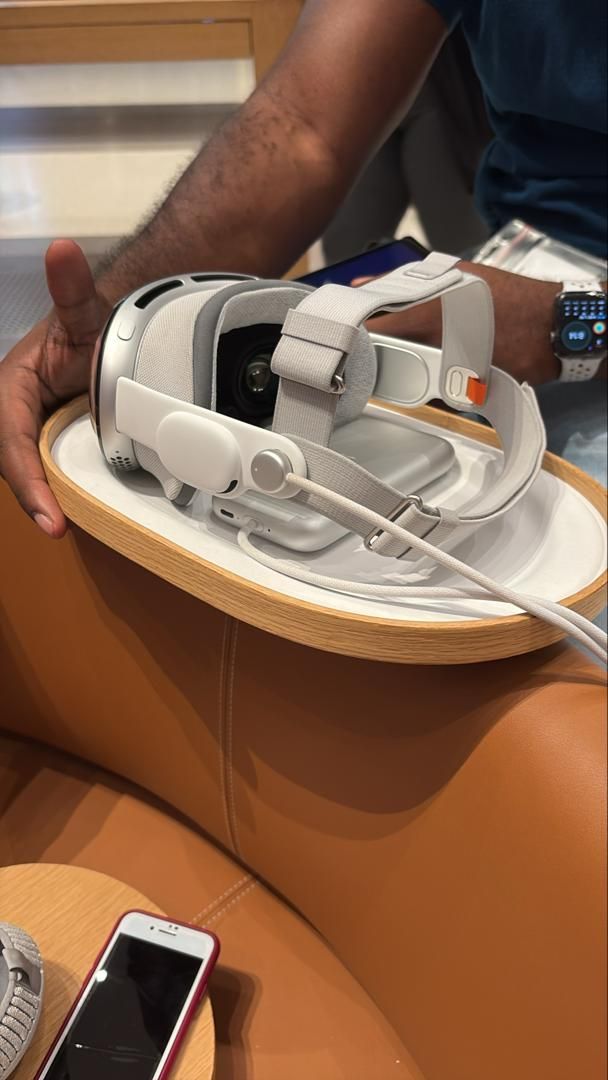 One of the last photos nonch sent me
For the first time since I can remember, I’m not looking forward to the next Apple event or announcement. Two months ago today, I unexpectedly lost one of my best friends. One of those friends that you call brother and mean it. In all honesty, his passing has broken something.
I’m shielded from reality since we live in different countries. I’m still clinging to the hope that we just haven’t talked for too long. But soon, on the next Apple announcement, I’ll get a voice note saying “So, what do you think?”, and everything will be alright. It’s important to note that Alonso’s voice notes were the only ones I had to hear at 1x. As with everything about him, his regular speed was just faster.
He was smarter than me, funnier than me, larger than me, both physically and in presence. Nonch had a Graphite iBook just around college — probably the first one I ever saw. He was cool like that. He was the center of things. The driver of plans. The sweetest force of nature that ever was. The one that always called.
Soon a new iThingy will be announced, and we won’t message about it. And I’ll know for sure. He’s gone.
January 18, 2025
Tidbits for 2025 Week 03
Happy new year everyone. Back to my routine after the holidays. Got some great gift this year: NanoFoamer PRO Gen2, Apple iPad Mini 7, with Apple Pencil Pro and PITAKA case, Anker Power Bank USB C Charger Block, Quechua NH Escape 500 23 L backpack, and last but not least COBI Armed Forces A-10 . I’m very spoiled. With that, here’s some links.
fullmoon: Supports macOS, iOS, iPadOS; enables chatting with private and local large language models; free and open source. ⥃ Useful if you don’t have Apple Intelligence and want/need to keep data local.
Chorus: macOS, chat with multiple AI models simultaneously, free. ⥃ BoltAi is still my main prompt app, but seeing replies from GPT-4o, Claude 3.5 Sonnet and Gemini 2.0 Flash at the same time is very useful.
Keychron Silicone Palm Rest: The Keychron Silicone Palm Rest, designed with sleek and durable silicone, offers exceptional ergonomic support and comfort for extended gaming sessions. ⥃ Getting this for my K3/S1 at some point this year. Seems new, and good price.
Keychron Folio Case for Slim Keyboard: Crafted with PU and PC, the Keychron foldable case is designed to protect your K3 Max / K3 Pro / K3 Version 3 / K3 keyboard in style. ⥃ Not getting this, but wanting it.
Cupertino: Obsidian theme offering a native experience on macOS, iOS, and Windows, enhancing usability with a clean and minimal design, available for free. ⥃ New theme for this blog’s vault.
ElevationLab TimeCapsule™ AirTag Case: uses AAA batteries, giving the stick a theoretical 10-Year Battery™ . ⥃ Got it already. Looks great. AirTag gadgets are my weakness.
IconKitchen App Icon Generator for iOS, Android and Web apps. ⥃ Using this a lot for my new home screen.
tidbits
January 18, 2025
Rui Carmo, on taoofmac.com:
Although it’s been only a couple of months, the part of me that initially pondered the Nomad as a “better notebook” is still reeling, since I feel like I’ve barely scratched the surface, but I’m getting ahead of myself. […] There is something about doing handwriting on computers that I find profoundly appealing–I used a Newton MessagePad and was obsessed about Palm devices (I still have a working Palm V somewhere), so being able to quickly scrawl out something on a distraction-free device and then re-work it on my Mac later is extremely attractive to me.
Super detailed review. I think the Supernote is getting more love within Mac writers.
snippets
January 14, 2025
A Mouse Tale Update
I wrote about my mice situation a while back. Here’s a quick update.
I did buy the Lenovo Professional Bluetooth Rechargeable Mouse and it’s working great at my office desk. Size is large, and arch is comfortable. It’s a bit too light, but workable.
At home I’m using the Microsoft Bluetooth Ergonomic Mouse. It’s a good-enough replacement to its big brother Surface Precision Mouse.
And now some great news, InCase finally launched their Designed by Microsoft™ line, and the Bluetooth Ergonomic Mouse is back… for $50. That’s 2X what I paid for the Microsoft version 4 years ago. Ouch.
I planted a flag on the previous post regarding the price:
At the original $25 it was a steal, but it’s not worth anything above $40.
Sticking to it. However, I’ll be following the price and likely will buy one if it reaches $39.99 territory on a sale this year.
December 18, 2024
August “Gus” Mueller, on shapeof.com:
Acorn 8 has been released!
This is a major update of Acorn, and is currently on a time-limited sale for $19.99. It’s still a one time purchase to use as long as you’d like, and as usual, the full release notes are available. I want to highlight some of my favorite things below.
Insta-purchase for me. I’ve been using Acorn for 16 years, I have no plans to stop any time soon.
snippets
December 16, 2024
Mark Gurman, at Bloomberg:
The good news is, there’s a new Magic Mouse in the works. I’m told that Apple’s design team has been prototyping versions of the accessory in recent months, aiming to devise something that better fits the modern era.
I wasn’t looking for a complete rethink of the mouse with the recent update, but anything is better than the flat slap design for my wrist. Great, I’m in. I’ll start saving for WWDC25 when it…
As for when the mouse will arrive, I wouldn’t expect anything in the next 12 to 18 months. But the current Magic Mouse is nearing the end of its life, and Apple is working on a full overhaul. Once the design group settles on a final form, it will still take months or years of hardware engineering, software development and operations work to actually bring the mouse to market.
Never mind. Maybe my Microsoft Mouse will be resurrected by then.
snippets
December 14, 2024
Jan Miksovsky, on jan.miksovsky.com:
Today marks two years since I first set up an e-ink display in my mom’s apartment to help her live on her own with amnesia. The display has worked extremely well during those two years, so I’m sharing the basic set-up in case others find it useful for similar situations.
Touching geeky story. Interesting in multiple levels: hardware, software and use-case. Was a bit surprised he didn’t look for an existing webapp (Trello?), but can understand how he’d prefer to own the whole stack.
snippets
December 12, 2024
<! — Seth Godin –>
Seth Godin, on seths.blog:
I’m listening more than reading these days, and I find that a good audiobook can make a real impact on the way I absorb and learn from a book. It’s a once in a century sort of shift in this medium.
My new book is now available in audio. It’s not on Audible, at least not now. Audible has exploited their dominant position and the offer they make to authors is unfair and almost untenable.
Interesting perspective from someone I assume is a voracious reader, and we know is an impressive writer.
snippets
December 12, 2024
Jarrod Blundy, on heydingus.net:
I really should have more to say about this after many years of waiting it out to get one, but the simple truth is that the Magic Keyboard with Touch ID is just a great keyboard. I probably should have caved years ago to purchase one.
Don’t get me wrong; there were things that I quite liked about the Keychron K3 Ultra-Slim keyboard that I used to use — namely, its fun light-up colors, slick design, and trendy mechanical keys. But no one else can make a keyboard with Touch ID, and that’s the killer feature.
The arrow key layout is a deal-breaker for me… but is it? I respect Jarrod’s opinion too much, and he’s even coming from basically my same keyboard. I can understand how TouchID will make up for the arrows abomination. But I love the keyboard sound/travel from mine, and I use both plugged, so connections is a non-issue.
At the same, the Apple Watch does cover the most usual TouchID use-case with Auto Unlock and password requests approval. Still, if Apple ever sells a TouchID thingy, they’ll get my money.
snippets
December 11, 2024
From mailo.ameba.co:
TL;DR: Google implemented a new policy that doesn’t allow apps to access the Gmail API unless they are verified by “trusted third parties,” which costs time and money. We don’t have either.
Another app affected because of Google increased compliance requirements. Sadly in this case Mailo’s is going away. Ever since my buddy Nav had to shutdown Mail to Self because of GDPR, I keep going through possible replacements. Another one bites the dust.
snippets
December 10, 2024
jordanbaird, on github.com:
When I first created Ice, I decided to release it for free and make it open source. I firmly believe it is this decision that has enabled Ice’s userbase to grow at the incredible rate it has. While I am immensly grateful for the support I’ve received over the last several months, unfortunately, kind words don’t pay the bills. The reality is, most people who use the app do so without providing a financial contribution. While I want to make it clear that nobody is obligated to give me money, as a human being, I need to be able to support myself financially. As such, I have accepted a full time position with a company, and will be developing their macOS app. While I will try to continue to provide support and updates for Ice, I want to make it clear that most of my time in the forseeable future will be dedicated to my job.
ICE has improved continually over the last couple of months. It’s now a viable replacement over Bartender for most people. All the best to the developer and I hope the app gets another lead dev to continue updated.
My recent subscription to Setapp has led me back to Bartender — and for my very heavy Menu Bar icons use — it works a lot better.
snippets
December 5, 2024
Finished Pantheon last night. Really enjoyed it. It’s not uniformly good, but the storyline is solid and absolutely exponential towards the end. You do notice that they knew it wouldn’t be renewed after season 2, and it basically compresses probably a couple more seasons in the last two episodes. Especially on those last episodes, I love the universe created, and would watch or read a lot of, or anything that tells us more about it.
Highly recommended.
snippets
December 4, 2024
Robb Knight, on rknight.me:
Unlike Alex, I don’t choose a new name when it gets replaced - my iPhone is always called Starlord. Which brings me to the naming scheme: Marvel characters. Some of these make sense, some of them don’t.
This is a response post — and both about naming your devices. Who geeks out about computer names? I’ve been using character names from books for the last few years. It’s fun when I set them up — a huge mess for anything older than a year.
snippets
December 4, 2024
Adam Engst, on tidbits.com:
I ran across an intriguing app earlier this year that has become my go-to tool for working with CSV files: Modern CSV. When you launch it, it looks like a spreadsheet, displaying data in rows and columns, but it doesn’t require that you write formulas to manipulate data. Instead, it has an extensive set of data manipulation capabilities that you apply directly to the contents of a CSV file.
Great Modern CSV overview. The app is part of my core setup and I really enjoy using it. I’ve tried many alternatives and always come back to it.
snippets
December 4, 2024
WhatsApp.com, on blog.whatsapp.com:
For those moments we’re excited to introduce voice message transcripts. Voice messages can be transcribed into text to help you keep up with conversations no matter what you’re doing.
Transcripts are generated on your device so that no one else, not even WhatsApp, can hear or read your personal messages.
This is extremely cool and useful. I use voice notes in WhatsApp a lot — don’t mind listening to podcast notes as others might, since it’s better than not hearing from someone. The fact that it happens in-device is also appreciated.
To get started, go to Settings > Chats > Voice message transcripts to easily turn transcriptions on or off and select your transcript language. You can transcribe a voice message by long pressing on the message and tapping on ‘transcribe’. We’re excited to build on this experience and make it even better and more seamless.
Been waiting and finally got access today. Switched the language to Spanish — only supports one language right now. But it works extremely well.
snippets
December 4, 2024
About a month ago kepano, on obsidian.md:
Today, we’re introducing Obsidian Web Clipper a new extension that helps you highlight and capture the web in your favorite browser. Anything you save is stored as durable Markdown files that you can read offline, and preserve for the long term.
Web Clipper is available for all major browsers on desktop and mobile, including Firefox, Safari, Chrome, Brave, Arc, Orion, and many more. It’s also open source under the MIT license.
I started testing the beta a while back, and was intrigued. The release coincided with Omnivore’s demise, which led me to take another serious look.
And then, last week the Interpreter feature was introduced:
Interpreter is a Web Clipper feature that lets you interact with web pages using natural language. Interpreter helps you capture and modify data that you want to save to Obsidian. For example:
- Extract specific text fragments.
- Summarize or explain information.
- Convert text from one format to another.
- Translate text to a different language.
You basically add your OpenAI/Anthropic (and others) keys, and run whatever you selected through the model. This is game-changing. I’m still just playing with this, but now I’m glad my workflow was upended.
snippets
December 3, 2024
Nilay Patel, on theverge.com:
Today we’re launching a Verge subscription that lets you get rid of a bunch of ads, gets you unlimited access to our top-notch reporting and analysis across the site and our killer premium newsletters, and generally lets you support independent tech journalism in a world of sponsored influencer content. It’ll cost $7 / month or $50 / year
I instantly subscribed. There’s no real benefit for now — I don’t see ads and Feedbin already generates a full feed — but they are my preferred source of tech news and I want to support them.
Hopefully they’ll develop some compelling features over the next year.
snippets
December 2, 2024
Tidbits for 2024 Week 52
Omnivore sunsetting ↯ threw my linking workflow for a spin. For now, I’m sending stuff to my personal space on Arc. Below is a sweep of what I had there. You’ll also notice a I’m playing with some characters (⑊, ⍿, ⊢, ♮, ☈) to separate the link description from my comment.
Swift Shift - Manage your mac’s windows like a pro: move/resize windows with your mouse without searching for tiny arrows or window titles. ⑊ Moom 4 already has this, but this works better if you want to use Window Tiling and Snapping in Sequoia as default.
Recents - A file launcher designed for Mac: file launcher that gathers all your recent files from across your apps and intelligently sorts them. ⍿ Would like to use more, but not working with my mental model
Remarkably Organized: Create a custom planner & organizer for the e-ink tablets like the Remarkable 2. ⊢ 2025 is coming, and it’s time for a new Calendar PDF. hyperpaper planner is my default, but looking into this free option.
Capture Display: selectively share screen content, zoom in for detailed views, auto-save copied text and screenshots into a shareable PDF, and features a prominent cursor for enhanced audience engagement. ♮ Screegle is still my default app screen sharing app, but keeping an eye on this one.
LIMINAL Spaces Wallpaper: Liminal Spaces, a vibrant and minimal cubist-inspired wallpaper series. ☈ Using this for sure.
TabTab - Supercharged Windows & Tabs Manager for Mac: window switching and tab management for Chrome, Safari, VS Code and more. ☈ Interesting concept, but tab management will be a bit overwhelming for me.
tidbits
November 21, 2024
From satechi.net:
Introducing the new Mac Mini M4 Stand & Hub — the next generation of desktop innovation. Crafted in the USA, this patented design reimagines your Mac Mini setup, combining cutting-edge functionality with Apple-inspired aesthetics.
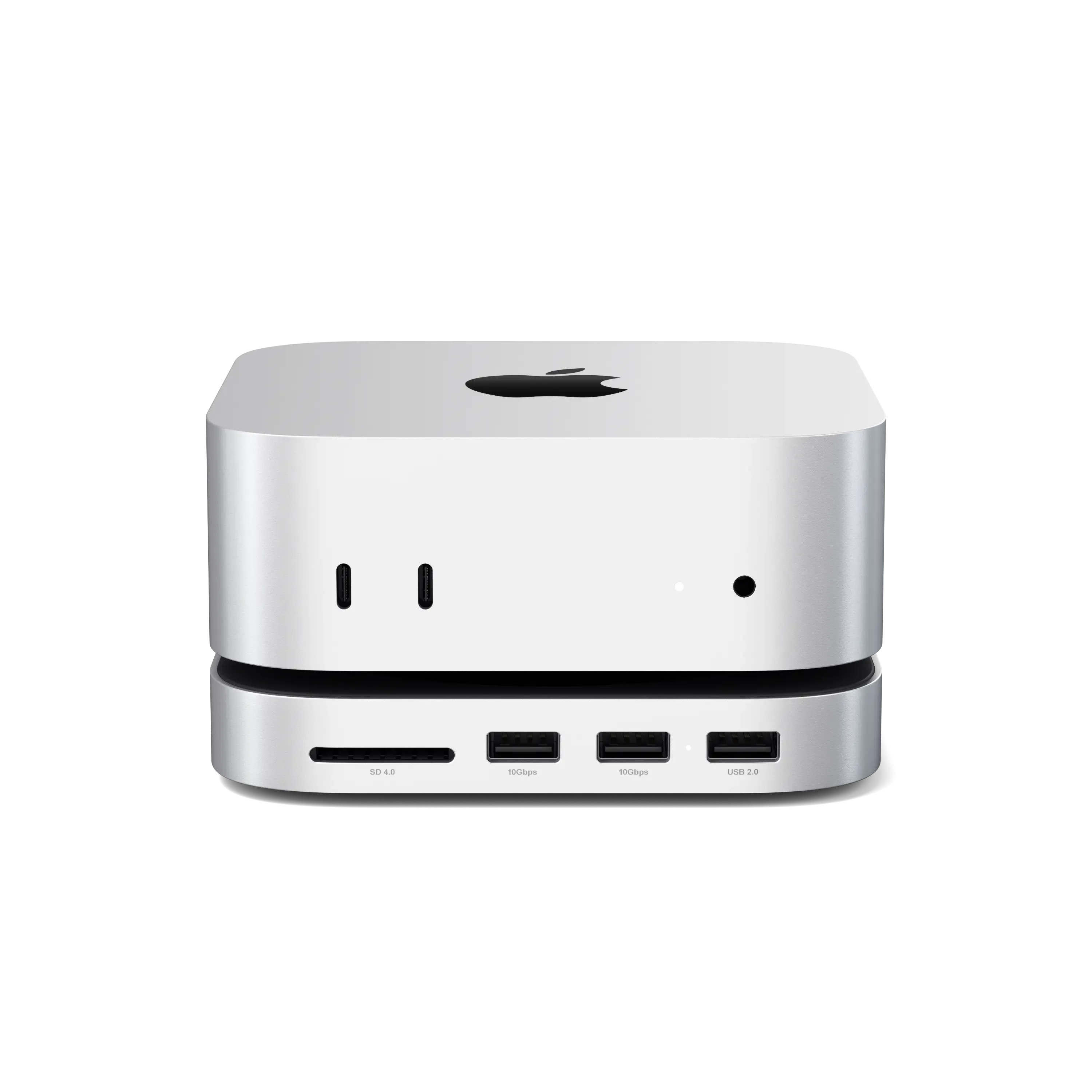 Product Photo
Mostly marketing content, but features look solid:
- Storage expansion supporting up to 4TB with SSD sizes M.2 /2242/2260/2280.
- Data transfer speeds up to 10Gbps.
- Inclusion of USB-A ports for peripheral connection.
- Front-facing ports for easy connectivity.
- Aluminum construction with heat-dissipating vents.
Last one is important, be cause the previous product did have some reports of disconnecting/overheating. If they can keep the same prices point of $100, this’ll be very compelling — takes out his calculator - let’s see:
| 16GB/256GB |
$599 |
|
16GB/256GB |
$599 |
| Satechi Hub |
$99 |
|
Apple 2TB upgrade |
$800 |
SAMSUNG 2TB 990 PRO SSD
NVMe M.2 PCIe Gen4, M.2 2280 |
$160 |
|
|
|
| Total: |
$858 |
|
Total: |
$1399 |
I’ll be pondering over the next few months.
2025-01-14 Update: Andrew Liszewski, on theverge.com:
First announced in late November, Satechi has confirmed that its Mac Mini M4 Stand & Hub will be available in limited quantities starting February 17th, 2025 through its online store for $99.99. A wider release will begin sometime in March, according to an announcement by the company at CES 2025 today.
The hub, made from aluminum with a soft-touch silicone coating, is designed to expand the functionality of the Apple Mac Mini M4 with two front-facing USB-A 3.2 ports, a USB-A 2.0 port, and an SD card reader.
Let’s wait for some real reviews. But this looks like a very tempting combo.
snippets
November 20, 2024
From blog.transitapp.com:
Thanks to our clever engineering, we can now predict your location in a subway tunnel using your phone’s vibration signature.
Amazing. I don’t get a chance to travel by subway as much a as I like, but will totally download Transit to my next metropolis visit. To try:
Easy: just find yourself an underground train, open Transit, start a trip with GO, and watch the stations tick down, one-by-one! We’ve helped riders detect 1.5 million underground stations across ~400,000 trips during our initial tests.
snippets
November 6, 2024
MrMobile (Michael Fisher), on YouTube:
[…] I’ve got to believe that Amazon didn’t poach Panos just so he could preside over conservative iterations on what’s come before. I like these new Kindles, but I think the next chapter is the one that’ll really wow us.
Absolutely agree with Michael Fisher on this. I expect we’re getting some fun Kindle’s in the next couple of years with Panos Panay leadership. In fact, I’d be surprised if in a year or two we don’t have a phone sized Kindle
Good time to recommend MrMobile Channel. I enjoy his humor and his smart takes on tech topics. He also seem to have conceded the influencer rat-race and goes his own way on what gets reviewed.
snippets
November 2, 2024
On Arc Browser Becoming Boring
Josh Miller, CEO of The Browser Company, on youtube.com:
Got two things to share with you today: Arc is not going anywhere. The product you love is staying put, and we’re building a brand new product. To be honest, we’re not even sure it’s a web browser.
This created some drama within the Arc users community. The following two comments on the video sums it well:
@gurupanguji on a comment:
Have a feeling this is the goodbye message for the arc browser. Whenever a company says they are building a diff product for a larger audience against a product for a small set of users that’s free, one just needs to do the math.
@joshmiller973 (Arc’s CEO) reply:
Arc isn’t going anywhere. The number of people using Arc every day has grown ~4x this year. It’d be silly for us not to continue making it more stable, secure and performant. Our team poured their hearts into Arc. We’re just not going to keep cramming new features into it to try to make it something it’s not meant to be. I’ve personally been burned by software that becomes a Frankenstein product. I know future actions will speak louder than words but this is about building a second browser for the people that Arc doesn’t resonate with. There’s a reason we called it The Browser Company (not Arc). We’re inspired by Apple to have different product lines for different types of people and use cases.
Amazingly, a few weeks back Chris Messina nailed it on his newsletter article:
Now, I have no idea if this is an idea that Arc will carry forward in v2.0, but considering the relative lack of enthusiasm and stalled development of Easels and Boosts, and the commoditization of Arc Max features (see Sparkle and Fabric) I’m guessing that Arc is going to pivot hard towards agentive-style workflows that result in tasks being completed by and in the browser — and that are, to the right customers, worth paying for.
The whole post is worth a read. But the gist of Chris Messina article and Josh Miller’s announcement is that any app that wishes to provide a solution for 1 Billion users — should not hide behind a browser. It needs to be a floating orb on your desktop, providing answers, writing, transforming and combining whatever information/data it has access to.
At some point in the future, the orb will do its magic, not only within the constrains of your laptop desktop, or mobile home-screen. But with the context of what you’re actually seeing — the promised augmented reality paradigm.
Still, I’m happy that Arc will become boring and survive — at least for a while. It’s features are likely become standard UX language like Opera’s tabs, and level’s up the browser category for everyone.
November 1, 2024
Pixelmator Team, on Pixelmator Blog:
Pixelmator has signed an agreement to be acquired by Apple, subject to regulatory approval. There will be no material changes to the Pixelmator Pro, Pixelmator for iOS, and Photomator apps at this time. Stay tuned for exciting updates to come.
Congrats to the team. My guess is that this is a happy outcome for them. Pixelmator will likely become the a new Pro Apple app, which is great. But Photomator is a gonner in my opinion. Which saddens me as an user.
snippets
October 30, 2024
Drew Houston, on blog.dropbox.com:
I’m writing to let you all know that after careful consideration, we’ve decided to reduce our global workforce by approximately 20% or 528 Dropboxers. As CEO, I take full responsibility for this decision and the circumstances that led to it, and I’m truly sorry to those impacted by this change.
The post has too much corporate mumbo jumbo for my liking:
As we’ve shared over the last year, we’re in a transitional period as a company. Our FSS business has matured, and we’ve been working to build our next phase of growth with products like Dash. However, navigating this transition while maintaining our current structure and investment levels is no longer sustainable.
We continue to see softening demand and macro headwinds in our core business. But external factors are only part of the story. We’ve heard from many of you that our organizational structure has become overly complex, with excess layers of management slowing us down.
WTH? However, severance packages appear respectable — for US standards — which I respect. Sadly, Dropbox stopped being interesting for me long time go. And I’m sure that the free plan which hosts this blog will be affected sooner or later.
snippets
 5typos.net